


The first hard frost usually shows up a week or two before you expect it. One morning the lawn is crunchy, the garden hose is a stiff coil of ice, and you remember you meant to clean the eavestroughs back in September. A good fall home maintenance checklist exists for exactly that moment, so the jobs get done while it’s still comfortable to be on a ladder and before small problems get locked in by snow and cold.
This guide is written for Canadian homeowners, from Ontario suburbs to the Prairies to the coast. Most of it is weekend work; a few items are better left to a licensed pro. Either way, the goal is the same: keep water out, keep heat in, and make sure the systems that protect your family are working before you need them.
Why fall maintenance matters more in Canada
Our winters are hard on houses. Water freezes and expands in cracks, ice dams form along eaves, and furnaces run for months with barely a break. Natural Resources Canada notes that space heating accounts for more than half of the average Canadian home’s energy bill, and that windows and doors can be responsible for up to 25% of total heat loss. That’s a lot of money leaking through gaps you could seal in an afternoon.
Repairs also get more expensive and awkward once the snow arrives. A roofer can fix a lifted shingle in October in an hour. In January, the same job may wait until spring, and the leak keeps going in the meantime.
Outside: your fall home maintenance checklist for the exterior
Start outdoors while the weather is still mild. Pick a dry day, and if you’re going up a ladder, have someone at the bottom.
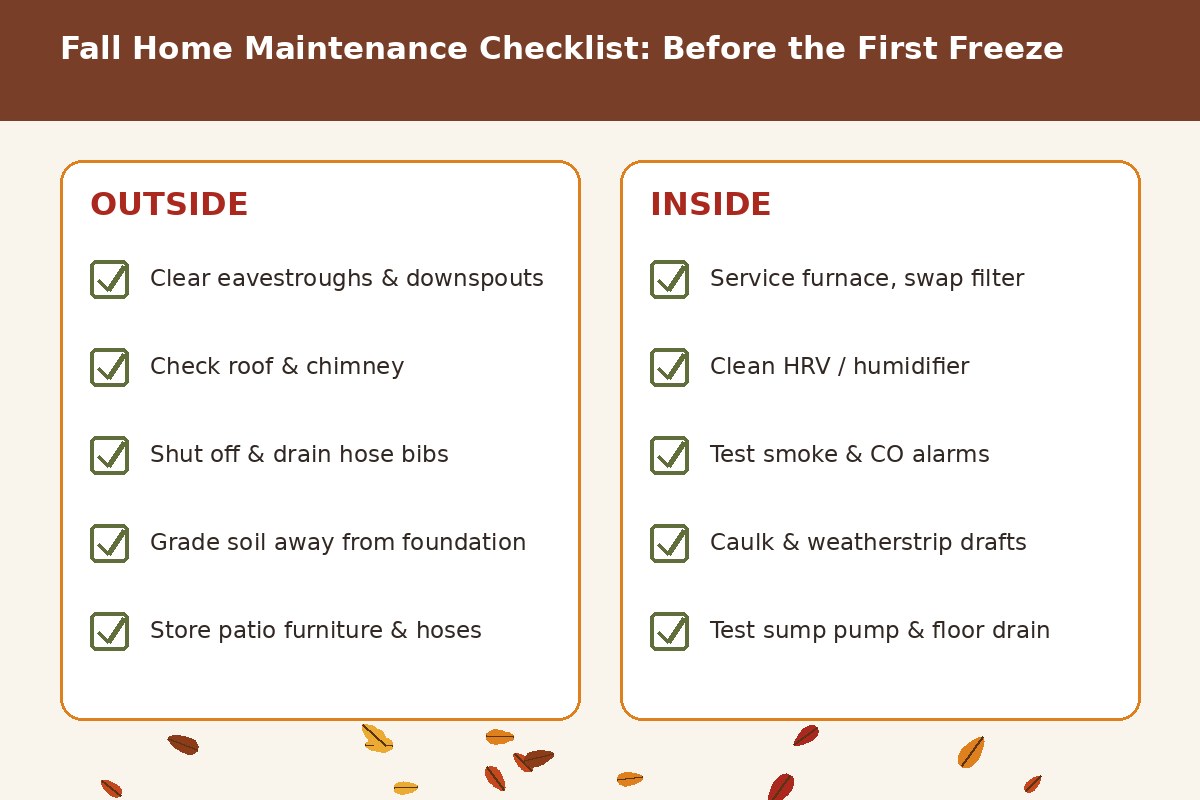
Clear eavestroughs and downspouts
Wait until most of the leaves have dropped, then scoop out the troughs and flush them with a hose. Watch where the water goes. Downspouts should discharge at least a couple of metres from the foundation, ideally onto a splash pad or extension that points downhill. Blocked troughs overflow, and that water ends up right against your basement walls or freezing into ice dams at the roof edge.
Look at the roof and chimney
You don’t need to climb up to do a decent inspection. Binoculars from the yard work well. Look for curled, cracked, or missing shingles, lifted flashing around vents and the chimney, and granules collecting in the eavestroughs, which can mean shingles are near the end of their life. If you burn wood, book a chimney sweep before the season starts and check that the cap is intact.
Shut off and drain outdoor taps
This is the one job people forget, and it can be the most expensive. Unless you have frost-free hose bibs, close the interior shut-off valve that feeds each outdoor tap, then open the tap outside to let the line drain. Disconnect hoses, drain them, and store them in the garage or shed. A hose left attached can trap water in the bib, which freezes and splits the pipe inside the wall. You often won’t notice until spring, when the tap is turned on and water runs into the basement.
Check grading and drainage around the foundation
The ground next to your house should slope away from it. Over the years, soil settles, garden beds get built up, and patio stones sink. Walk the perimeter after a rainfall and look for puddles near the walls. Topping up low spots with clean fill now is far cheaper than dealing with a wet basement later. If you’ve already seen dampness, efflorescence, or musty smells downstairs, read our guide on basement waterproofing signs you shouldn’t ignore before the ground freezes.
Put the yard to bed
- Clean and store patio furniture, cushions, and the barbecue cover (or move the barbecue somewhere sheltered).
- Trim branches that hang over the roof or rub against siding. Heavy snow and ice bring weak limbs down.
- Rake leaves off the lawn so they don’t smother the grass, and use them as mulch on garden beds.
- Wrap young shrubs and cedars in burlap if you’re in a windy or salt-exposed spot.
- Get the snow shovel, ice melt, and snow blower out where you can reach them. Start the snow blower once to make sure it runs.
Seal the exterior envelope
Walk around with a tube of exterior caulking and look closely at window and door frames, where pipes and wires enter the house, and along the line where siding meets the foundation. Small gaps let in cold air, water, and mice. One tip straight from Natural Resources Canada’s guidance: do your interior air sealing first. Caulking only the exterior can trap warm, moist indoor air inside the wall, where it can cause damage over time.
Inside: heating, air, and comfort
Service the furnace and change the filter
Your furnace is about to become the hardest-working appliance in the house. Book an annual check-up with a licensed HVAC technician in early fall, before the busy season fills their schedule. They’ll test the burner, heat exchanger, venting, and safety controls. Between visits, check the filter monthly during the heating season and replace it when it looks grey and clogged. NRCan recommends cleaning or changing filters at least every three months, because a dirty filter makes the system work harder for less heat. If you’re weighing whether to repair or replace an older unit, our post on choosing a heating and air conditioning company covers what to ask.
Don’t skip the HRV and humidifier
If your home has a heat recovery ventilator (HRV) or energy recovery ventilator (ERV), pull out and wash the filters and clear the outdoor intake and exhaust hoods of leaves and cobwebs. A furnace-mounted humidifier needs a fresh pad and a cleaning before you turn it back on. Keep an eye on indoor humidity through the winter. Heavy condensation on windows is a sign it’s too high, and that moisture can lead to mould around frames.
Find and fix drafts
On a cool, windy day, hold a stick of incense or a lit candle near window frames, door edges, baseboards, and electrical outlets on exterior walls. If the smoke or flame wavers, you’ve found a leak. Most fixes are cheap:
- Replace worn or flattened weatherstripping on doors and operable windows. Take a piece of the old strip to the store so you get the right profile.
- Install a new door sweep if you can see daylight under an exterior door.
- Add foam gaskets behind outlet and switch plates on outside walls.
- Re-caulk interior window trim where the old bead has cracked or pulled away.
Remember that every bedroom needs at least one window that opens for emergency escape, so don’t caulk those shut.
Set the thermostat sensibly
A programmable or smart thermostat pays for itself quickly in a Canadian winter. NRCan suggests around 20°C when you’re home and awake, and about 17°C overnight or when the house is empty. Program it now, so you aren’t fiddling with it on the first cold night.
Safety checks you shouldn’t postpone
Fall is when the furnace, fireplace, and space heaters all come back online, which makes it the right time to check the devices that protect you from them.
- Smoke alarms: Test every unit and replace batteries. A handy habit is to do it when the clocks change in early November. Alarms themselves wear out, so check the manufacture date on the back. Most need replacing after about ten years.
- Carbon monoxide alarms: Every home with a fuel-burning appliance or an attached garage needs them, ideally near sleeping areas. Test them the same day as your smoke alarms.
- Fire extinguisher: Check the pressure gauge and make sure everyone knows where it is.
- Emergency kit: Winter storms and power outages happen. Keep water, non-perishable food, flashlights, batteries, a radio, and any medications in one place for at least 72 hours.
Plumbing and basement prep
Water damage is one of the most common reasons Canadians make home insurance claims, and plenty of those leaks start in winter. A few minutes in the basement now can head them off.
Test the sump pump
Pour a bucket of water into the sump pit and confirm the pump kicks on, empties the pit, and shuts off. Make sure the discharge line outside is clear and won’t freeze shut. If your pump has a battery backup, check the battery’s age and charge.
Protect pipes from freezing
Look for pipes running along exterior walls, in crawl spaces, or in an unheated garage. Foam pipe sleeves are inexpensive and easy to fit. If you’re going away for more than a few days in winter, leave the heat on and ask someone to check the house, or shut off the main water valve and drain the lines. Know where that main shut-off is and make sure it turns freely.
Floor drains and fixtures
Pour water into the basement floor drain to keep the trap full, which stops sewer gas coming up. Do the same for rarely used sinks and showers. If drains have been slow, deal with them now rather than mid-winter. Our article on drainage cleaning explains when a DIY fix is fine and when to call a plumber.
A realistic way to get it all done
Nobody finishes this whole list in one Saturday. Split it up:
- Weekend one (early to mid October): Book the furnace service and chimney sweep. Check the roof from the ground, seal exterior gaps, and fix grading.
- Weekend two (late October): Clean eavestroughs once the leaves are down, shut off outdoor taps, store hoses and furniture, and test the sump pump.
- Weekend three (early November): Weatherstrip, swap the furnace filter, clean the HRV, test smoke and CO alarms, and stock the emergency kit.
When to call a professional
Plenty of this is DIY-friendly. Some of it isn’t. Gas appliances, chimney repairs, roof work at height, electrical problems, and anything involving foundation cracks or recurring basement water belong with licensed trades. Get a few quotes, ask for proof of insurance, and book early.
For a broader seasonal list in plain language, CAA-Quebec’s fall home maintenance guide is worth bookmarking, and Natural Resources Canada’s tips on staying warm in winter without turning up the heat go deeper on air sealing and thermostat settings.
The bottom line
Work through this fall home maintenance checklist over a few weekends and winter becomes a lot less stressful. The furnace has been checked, the pipes won’t burst, water drains away from the house, and the drafty back door finally closes properly. That’s a few hours of work now in exchange for a warmer, safer, and cheaper winter.

