


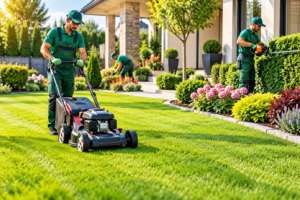
Commercial landscapes need to do more than look attractive. They guide people toward entrances, frame signage, separate pedestrian and vehicle areas, and create usable outdoor environments around buildings. Well-organized Commercial Landscaping Services can support both appearance and everyday functionality.
This practical perspective changes how maintenance priorities are selected.
Landscaping Should Support Movement
Outdoor spaces are constantly used by people arriving, leaving, delivering goods, or moving between buildings.
Vegetation should complement these movements rather than interfere with them.
Commercial Landscaping Services can include monitoring plant growth near sidewalks, entrances, signs, and other frequently used locations.
Watch Natural Walking Routes
People do not always follow designed pathways.
Repeated shortcuts across turf may create worn areas and compacted soil.
Instead of viewing damaged grass as an isolated maintenance problem, consider how site use contributes to it.
Maintain Clear Sightlines
Plants naturally become larger over time.
Without monitoring, shrubs and branches may begin interfering with signs or visibility around key property areas.
Commercial Landscaping Services can incorporate selective pruning to maintain appropriate growth.
Businesses seeking professional commercial landscaping nearby should consider functionality alongside visual presentation.
Keep Turf Suitable for Its Location
Commercial turf often occupies open spaces between buildings, parking areas, roads, and landscape beds.
These environments can expose grass to heat, traffic, and varying moisture conditions.
Adjust Care to Site Conditions
A shaded lawn section may behave differently from turf beside pavement.
Commercial Landscaping Services should recognize these differences rather than assuming the entire property has identical needs.
Mowing, monitoring, and turf-repair decisions become more effective when site conditions are considered.
Planting Beds Should Remain Defined
Beds create structure around commercial buildings.
When weeds spread or edges disappear, the landscape can begin looking visually confused.
Regular bed attention maintains separation between plants, turf, and paved areas.
Debris removal also helps keep these spaces orderly.
Maintenance Supports Predictability
Property managers benefit when outdoor areas remain within an expected standard.
Routine Commercial Landscaping Services reduce the need to repeatedly identify obvious tasks and arrange corrective work.
Inspection Adds Value to Routine Visits
Maintenance teams are regularly present throughout the landscape, giving them an opportunity to notice changing conditions.
Plant stress, erosion, damaged turf, drainage concerns, and uncontrolled vegetation can all be identified during routine work.
Early awareness allows property managers to plan an appropriate response.
Adapt to Seasonal Use
A landscape may function differently depending on the season.
Outdoor gathering areas receive greater use during warm months, while autumn leaf accumulation changes cleanup priorities.
Winter conditions can further alter pedestrian and vehicle movement.
Commercial Landscaping Services should adapt accordingly.
Keep the Whole Property Connected
A commercial landscape looks most intentional when individual sections follow a consistent standard.
Turf, beds, entrances, pathways, and perimeter areas should feel like parts of the same property rather than unrelated maintenance zones.
Conclusion
Commercial Landscaping Services can support much more than visual appearance. Thoughtful maintenance helps preserve clear pathways, appropriate sightlines, defined planting areas, usable turf, and predictable exterior conditions. By considering how people move through a property and how different landscape zones respond to traffic and weather, maintenance becomes more practical. Regular inspection further helps identify changing conditions early. The result is an outdoor environment that remains organized while supporting the everyday function of the commercial property.
